
This Guarapo de Piña is bright, slightly tart, and gently fizzy — pineapple rind and core yield a fragrant, fruity brew with a touch of pineapple-vinegar tang and natural carbonation.
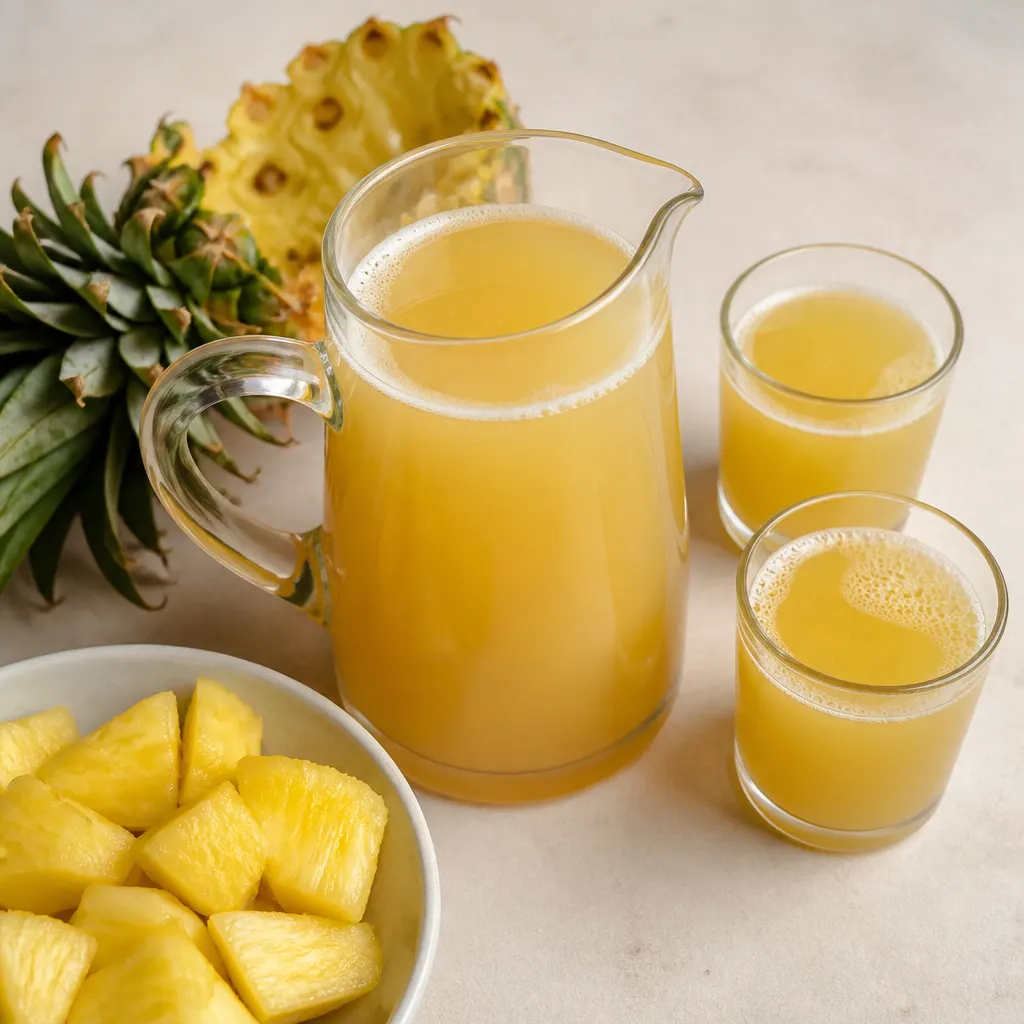
It’s a no-cook, make-ahead refresher: start the ferment overnight, chill for 3 to 4 days, then strain and sweeten to taste. Serve over ice for a cooling pitcher-sized drink that stretches a single pineapple into several servings.
Why You’ll Love This Recipe
Guarapo de Piña turns what’s usually discarded — the pineapple rind and core — into a vibrant, probiotic-forward beverage with minimal effort and no stove required.
Easy steps and clear sensory cues make this a low-effort ferment you can trust — rinse the rind well, watch for bubbles and white foam, and discard if anything smells rotten or shows visible mold.
Ingredients You’ll Need
How to Make Guarapo de Piña
- Wash the pineapple rind and core under running water. Place the peel and core in a pitcher or large glass jar large enough to hold the rind and 2 quarts drinking water, then add the 2 quarts of water.
- Cover the pitcher or jar with cheesecloth or a clean cotton kitchen towel and leave it at room temperature overnight; you should see tiny bubbles on the surface after this first rest.
- Refrigerate the covered container for 3 to 4 days, or until you notice white foam and bubbles stuck to the sides; the liquid should smell fruity and a bit like pineapple vinegar but should not have a rotten or foul odor. Refrigeration slows but does not stop fermentation, so check daily for the described visual and smell cues.
- Strain the liquid to discard solids and pour the strained liquid into a clean pitcher. Add 1 cups sugar (or brown sugar or an equivalent sweetener) to taste and stir with a wooden spoon until dissolved. Serve with ice and optional frozen pineapple cubes.
Fermentation Timing & Signs
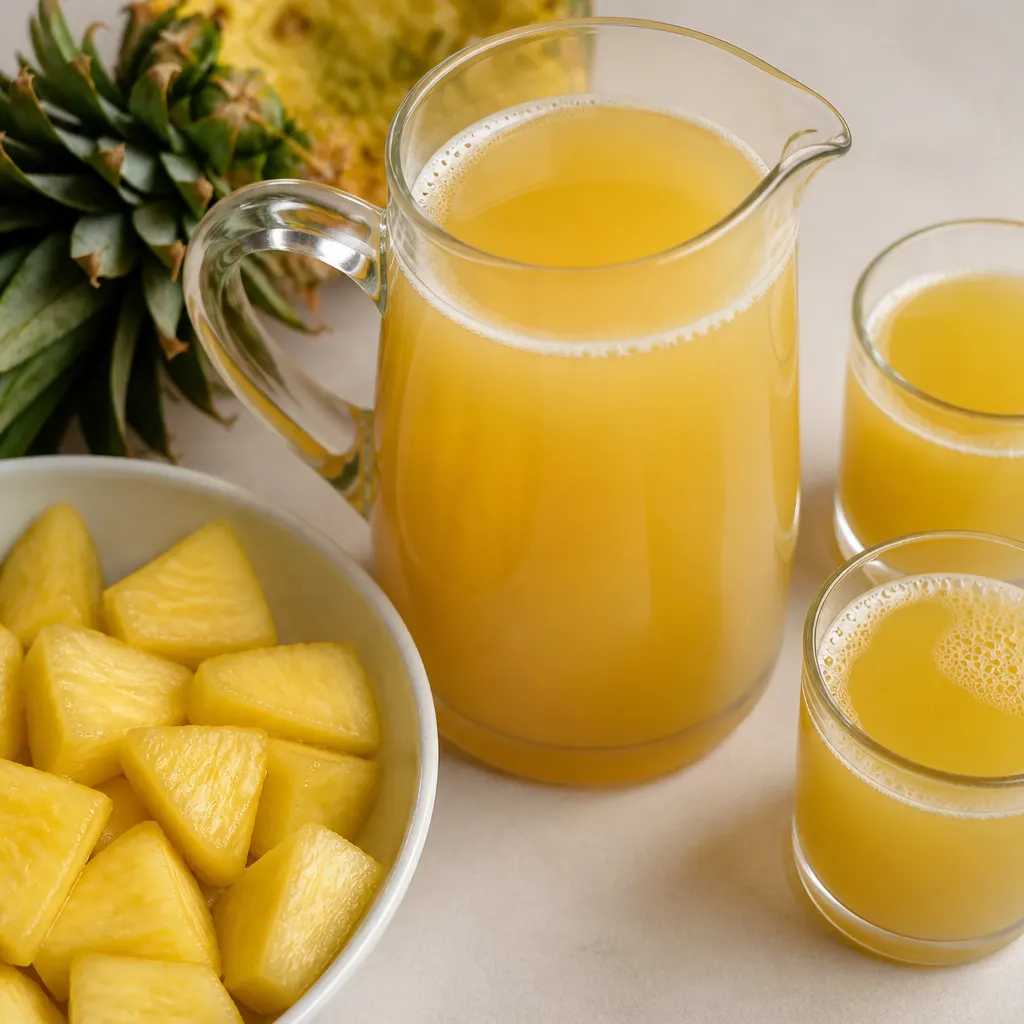
Fermentation begins quickly: you’ll see tiny bubbles after the initial overnight rest, then more visible white foam and bubbles along the glass during refrigeration. These are normal and indicate active fermentation.
Because household temperatures and the natural yeast load on fruit vary, use visual and smell checkpoints rather than strictly counting days.
- Overnight at room temperature: look for tiny surface bubbles.
- Refrigerate 3 to 4 days: expect white foam and bubbles stuck to the sides.
- Smell check: a fruity, slightly vinegary aroma is normal; a rotten or putrid smell is not.
Sweeten and Serve
Sweeten only after straining so you can tailor sweetness without interfering with fermentation. The recipe lists 1 cups sugar as the suggested sweetener but add to taste — start small and increase if desired.
Serve cold over ice, or use frozen pineapple cubes for an extra-chilled presentation and burst of fresh fruit as the cubes thaw.
- Try brown sugar for a deeper, molasses-like note.
- For lower sweetness, use less sugar or a liquid sweetener — add gradually and taste.
- Garnish with fresh pineapple pieces or mint for contrast.
Zero-Waste Pineapple Uses
After straining the rind and core, you can compost the solids or use them in garden-friendly compost tea if you compost at home. If you prefer not to compost, discard responsibly.
Reserve the fresh pineapple flesh you cut away for serving the drink, blending into smoothies, or adding to salads so nothing from the fruit is wasted.
- Compost peels and cores when possible.
- Freeze small pineapple pieces for later use in drinks or smoothies.
- Use leftover fresh pineapple in salsas, yogurt bowls, or fruit salads.
Tips for Success
Sanitation matters: Use a very clean pitcher or jar and rinse the pineapple rind thoroughly; if the ferment develops visible mold or a rotten/off smell, discard and start again.
Watch the smell, not the clock: Timing can vary with temperature — look for white foam, bubbles on the sides, and a fruity/pineapple-vinegar aroma as signs that the ferment is developing properly.
Adjust sweetness after ferment: Sweeten after straining so you control final flavor. Start with less than you think and add more; brown sugar gives a rounder, caramel note compared with white sugar.
Keep it cool for milder fizz: Storing the ferment in the refrigerator for 3 to 4 days slows activity and produces a gentler, controlled carbonation than leaving it longer at room temperature.
Save This Recipe

Frequently Asked Questions
Final Notes
Guarapo de Piña is an easy, practical way to stretch a pineapple and enjoy a fizzy, zero-waste beverage. Use the sensory checkpoints (bubbles, white foam, fruity-vinegar smell) to decide when it’s ready.
Make a pitcher for gatherings or batch it for the week — sweeten to taste after straining and keep refrigerated for a milder, longer-lasting drink.
Guarapo de Piña (Fermented Pineapple Juice)
Equipment
- pitcher or large glass jar
- cheesecloth or cotton kitchen towel
- fine-mesh strainer
- wooden spoon
Ingredients
- 1 pineapple peel (rind) and core; plus pineapple for serving (see notes)
- 2 quarts drinking water
- 1 cup sugar or brown sugar, or equivalent sweetener
Instructions
- Wash the pineapple rind and core under running water. Place the peel and core in a pitcher or large glass jar large enough to hold the rind and 2 quarts drinking water, then add the 2 quarts of water.
- Cover the pitcher or jar with cheesecloth or a clean cotton kitchen towel and leave it at room temperature overnight; you should see tiny bubbles on the surface.
- Refrigerate the covered container for 3 to 4 days, or until you notice white foam and bubbles stuck to the sides; the liquid should smell fruity and a bit like pineapple vinegar but not foul.
- Strain the liquid to discard solids and pour the strained liquid into a clean pitcher. Add 1 cups sugar (or brown sugar or an equivalent sweetener) to taste and stir with a wooden spoon until dissolved. Serve with ice and optional frozen pineapple cubes.